Egyptian Walking Onion
€3.00
Description
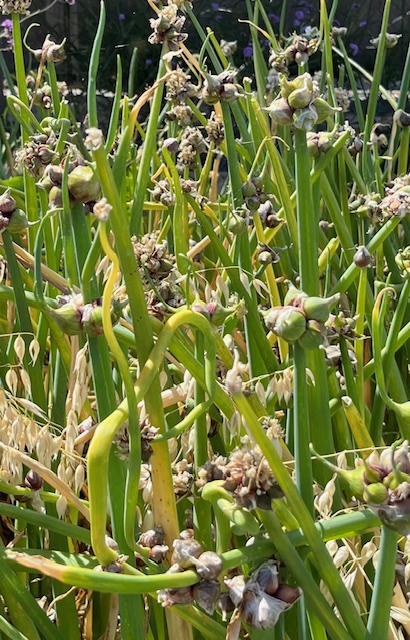
The Egyptian Walking Onion is a fascinating plant. Instead of producing flowers and seeds, it forms small bulbils (mini-onions) at the top of the stalk. As these bulbils grow heavier, the stalk bends down and “plants” itself — effectively walking across your garden over the years.
Planting:
Plant each bulbil into a small pot or large module with the tip of the bulbil sticking out of the compost. Plant out when rooted into fertile soil.
Spacing:
30cm x 30cm
Approx. seed count: 5 bulbils
I first saw these amazing alliums growing in an allotment in the community gardens in Bundoran. The gardener was from Bulgaria and said that they are widely grown there so I called them Bulgarian multiplier onions. However, the correct name is the Egyptian Walking Onion.
It has become one of my favourite perennial vegetables — both for its resilience and its quirkiness. Despite its exotic name, the Egyptian Walking Onion likely originated in Central or Western Asia and has been grown for centuries. It’s a true heirloom plant, and once you have it in your garden, you’ll never be without it again.
I’ve grown it for many years and love how low-maintenance it is. It survives the harshest winters and will reward you with edible parts nearly all year round. The green shoots can be harvested like spring onions in early summer. You can cut off the stalks just above the bulbs a numbers of times a year. The top-set bulbils are delicious in soups, stews, stir-fries or pickled in vinegar.
This is a great plant for perennial beds, forest gardens, or children’s gardens — and a reliable source of food with very little work.